
Marie-Chantal Ross

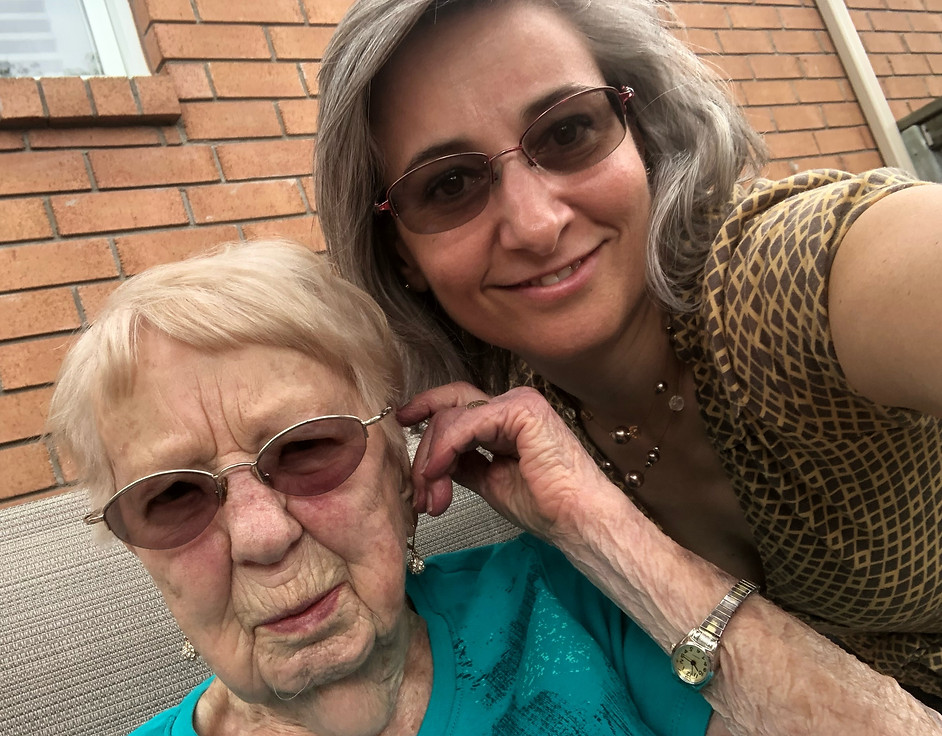
SeniorSynCare was born out of my personal caregiving journey with my grandmother, Stella. Stella was a fiercely independent woman who had always been in complete control of her life—and she taught me invaluable lessons about the importance of maintaining that control, even when facing cognitive decline. As her health deteriorated, watching her struggle to accept help became as challenging as managing her care itself. Despite having support from personal caregivers, friends, and family, Stella's resistance to acknowledging her need for assistance made coordinating her care exponentially more difficult. What should have been a manageable community effort became a full-time battle against both her declining health and her unwillingness to embrace the interconnected support that was available to her.
The most heartbreaking part of this journey wasn't just the logistical chaos, it was watching Stella's fierce independence work against her own wellbeing. She had spent her entire life believing that needing help meant losing dignity, never understanding that accepting care from a community is actually a beautiful expression of our interconnectedness. If Stella had been able to embrace the idea that receiving help wasn't a burden but a natural part of life's rhythm, both her experience and mine would have been profoundly different. The exhaustion I felt wasn't just from managing her care. It was from constantly working around her resistance to the very support systems designed to help her maintain the control and dignity she valued so deeply.
Fortunately, my partner Jason, a software expert and SeniorSynCare co-founder, created a coordination tool that became the foundation for transforming Stella's care. While the technology helped organize appointments, support worker schedules, and social visits in one place, what really changed everything was how it enabled us to build a proper community of care around Stella. The tool kept everyone informed and reduced confusion, but the real breakthrough came when we realized that effective end-of-life care requires a mix of technology and smart coordination and expert guidance. This experience became the blueprint for what SeniorSynCare offers today; comprehensive care coordination that combines technology with doula expertise and community building to ensure seniors receive not just organized care, but meaningful, dignified support.
After getting things organized with our coordination system, I met Stella's friend Brenda. As fate would have it, she was an end-of-life doula; exactly what we needed to help Stella understand that accepting professional guidance didn't mean surrendering control, but rather ensuring her wishes were honoured. Brenda, a key part of our company's development, had the expertise to help Stella see that building a care community was actually an extension of her independence, not a threat to it. Using our coordination tools, she could seamlessly integrate into Stella's care team when I couldn't be there. Her expertise guided us through the end-of-life process, allowing for conversations with Stella that our family dynamics and lack of knowledge had previously made difficult. Brenda ensured we were all aligned with Stella's wishes and helped us understand what to expect, which allowed Stella to die peacefully, surrounded by loved ones. She was able to say her goodbyes, and her final days were filled with care and comfort, thanks to a fully supportive community.
SeniorSynCare now offers this solution to others facing similar challenges. Our approach recognizes that many seniors, like Stella, have spent their lives valuing independence above all else. We help families navigate the delicate balance between honouring that independence while building the supportive care communities that make aging in place possible. Our goal is to transform end-of-life care into something meaningful and peaceful by helping seniors understand that accepting help is not about losing control, it's about maintaining it in the ways that matter most, while allowing their communities to support them with dignity and love.

Marie-Chantal Ross

SeniorSynCare was born out of my personal caregiving journey with my grandmother, Stella. Stella was a fiercely independent woman who had always been in complete control of her life—and she taught me invaluable lessons about the importance of maintaining that control, even when facing cognitive decline. As her health deteriorated, watching her struggle to accept help became as challenging as managing her care itself. Despite having support from personal caregivers, friends, and family, Stella's resistance to acknowledging her need for assistance made coordinating her care exponentially more difficult. What should have been a manageable community effort became a full-time battle against both her declining health and her unwillingness to embrace the interconnected support that was available to her.
The most heartbreaking part of this journey wasn't just the logistical chaos, it was watching Stella's fierce independence work against her own wellbeing. She had spent her entire life believing that needing help meant losing dignity, never understanding that accepting care from a community is actually a beautiful expression of our interconnectedness. If Stella had been able to embrace the idea that receiving help wasn't a burden but a natural part of life's rhythm, both her experience and mine would have been profoundly different. The exhaustion I felt wasn't just from managing her care. It was from constantly working around her resistance to the very support systems designed to help her maintain the control and dignity she valued so deeply.
Fortunately, my partner Jason, a software expert and SeniorSynCare co-founder, created a coordination tool that became the foundation for transforming Stella's care. While the technology helped organize appointments, support worker schedules, and social visits in one place, what really changed everything was how it enabled us to build a proper community of care around Stella. The tool kept everyone informed and reduced confusion, but the real breakthrough came when we realized that effective end-of-life care requires a mix of technology and smart coordination and expert guidance. This experience became the blueprint for what SeniorSynCare offers today; comprehensive care coordination that combines technology with doula expertise and community building to ensure seniors receive not just organized care, but meaningful, dignified support.
After getting things organized with our coordination system, I met Stella's friend Brenda. As fate would have it, she was an end-of-life doula; exactly what we needed to help Stella understand that accepting professional guidance didn't mean surrendering control, but rather ensuring her wishes were honoured. Brenda, a key part of our company's development, had the expertise to help Stella see that building a care community was actually an extension of her independence, not a threat to it. Using our coordination tools, she could seamlessly integrate into Stella's care team when I couldn't be there. Her expertise guided us through the end-of-life process, allowing for conversations with Stella that our family dynamics and lack of knowledge had previously made difficult. Brenda ensured we were all aligned with Stella's wishes and helped us understand what to expect, which allowed Stella to die peacefully, surrounded by loved ones. She was able to say her goodbyes, and her final days were filled with care and comfort, thanks to a fully supportive community.
SeniorSynCare now offers this solution to others facing similar challenges. Our approach recognizes that many seniors, like Stella, have spent their lives valuing independence above all else. We help families navigate the delicate balance between honouring that independence while building the supportive care communities that make aging in place possible. Our goal is to transform end-of-life care into something meaningful and peaceful by helping seniors understand that accepting help is not about losing control, it's about maintaining it in the ways that matter most, while allowing their communities to support them with dignity and love.
Marie-Chantal Ross
Aging is a whole-life experience.
Our Philosophy
Living Fully at Every Age
We believe aging well means thriving in all aspects of life. That's why our approach supports you across nine essential areas:
Because you're not just a patient, you're a whole person with a rich, multifaceted life worth celebrating and supporting
-
Body
-
Stay mobile, well-nourished, and physically comfortable
-
-
Mind
-
Maintain cognitive health and emotional wellbeing
-
-
Spirit
-
Nurture your spiritual practices and find peace
-
-
Love
-
Preserve intimate relationships and feel supported
-
-
Family
-
Navigate family dynamics and share your legacy
-
-
Community
-
Stay socially connected and engaged locally
-
-
Money
-
Maintain financial security and access resources
-
-
Purpose
-
Continue meaningful work, volunteering, and contribution
-
-
Joy
-
Pursue hobbies, passions, and life's simple pleasures
-
Because you're not just a patient, you're a whole person with a rich, multifaceted life worth celebrating and supporting

STANDOUT STYLE
Our Story
Our Team

Jason Wright
Chief Operations and Technology Officer
An electrical engineer by training, Jason has focused on promoting innovative approaches to providing superior customer value in Ottawa’s high-tech sector for over 20 years. After experiencing the death of Stella with Marie-Chantal, he became dedicated to finding ways to use his experience in business and technological leadership to find solutions that would transform end of life care for seniors. Jason obtained his Bachelor's of Engineering from Ryerson University (now TMU), a Masters in Engineering Management from the University of Ottawa.

Marie-Chantal Ross
Founder
After over 20 years working in innovation and technology development for the high tech, maritime and ocean sectors, Marie-Chantal pivoted her career to focus on end-of-life care. She is a mechanical engineer and hold's a Bachelor's degree in Applied Science from the University of Toronto. She has a Masters in Engineering Management from the University of Ottawa. She is both a trained hospice volunteer and a certified end-of-life doula from the Home Hospice Association.

Kirstin Pasanen
Director, Aging in Place Coorindation
Kirstin Pasanen is a former licensed practical nurse with over a decade of experience supporting seniors across hospital, clinic, and retirement home settings. Her expertise spans medication management, wound care, family support, and healthcare administration. Known for her compassionate, hands-on approach, Kirstin has worked in family medicine, long-term care, and both medical and surgical units, always prioritizing dignity and personalized care. Kirstin has a B.A. in Interdisciplinary Studies in Aging and Health from University of Ottawa and is currently enrolled at Queens University for her Master's and PhD in Health Sciences in Health and Aging. She brings both academic insight and clinical knowledge to her role. As Director of Aging in Place Coordination at SeniorSynCare, she designs and leads care strategies that help older adults remain safely and meaningfully at home.

Brenda Buckley
End-of-life expert (Doula)
Brenda has been interested in supporting people through difficult times since her youth. It was not until 2015 when she realized that helping seniors was a passion, particularly as they transition through end of life. Since then Brenda has been there for all her clients. She is patient and kind. She is an excellent listener and, cares deeply about her clients. Brenda is a Death Doula in good standing with the Ontario Doula Association. She studied End of Life Doula at Douglas College as well as Social Psychology at Algonquin College.